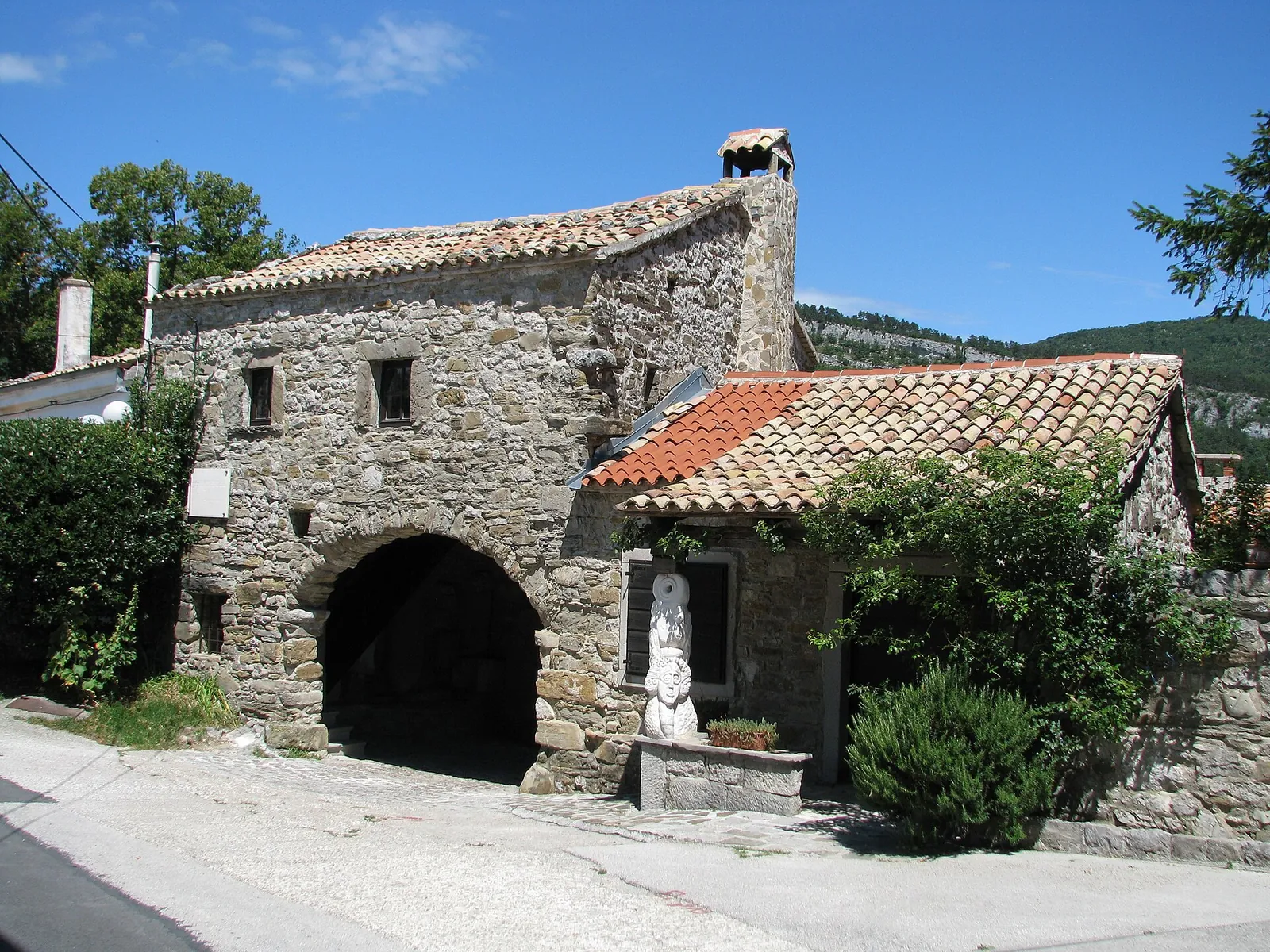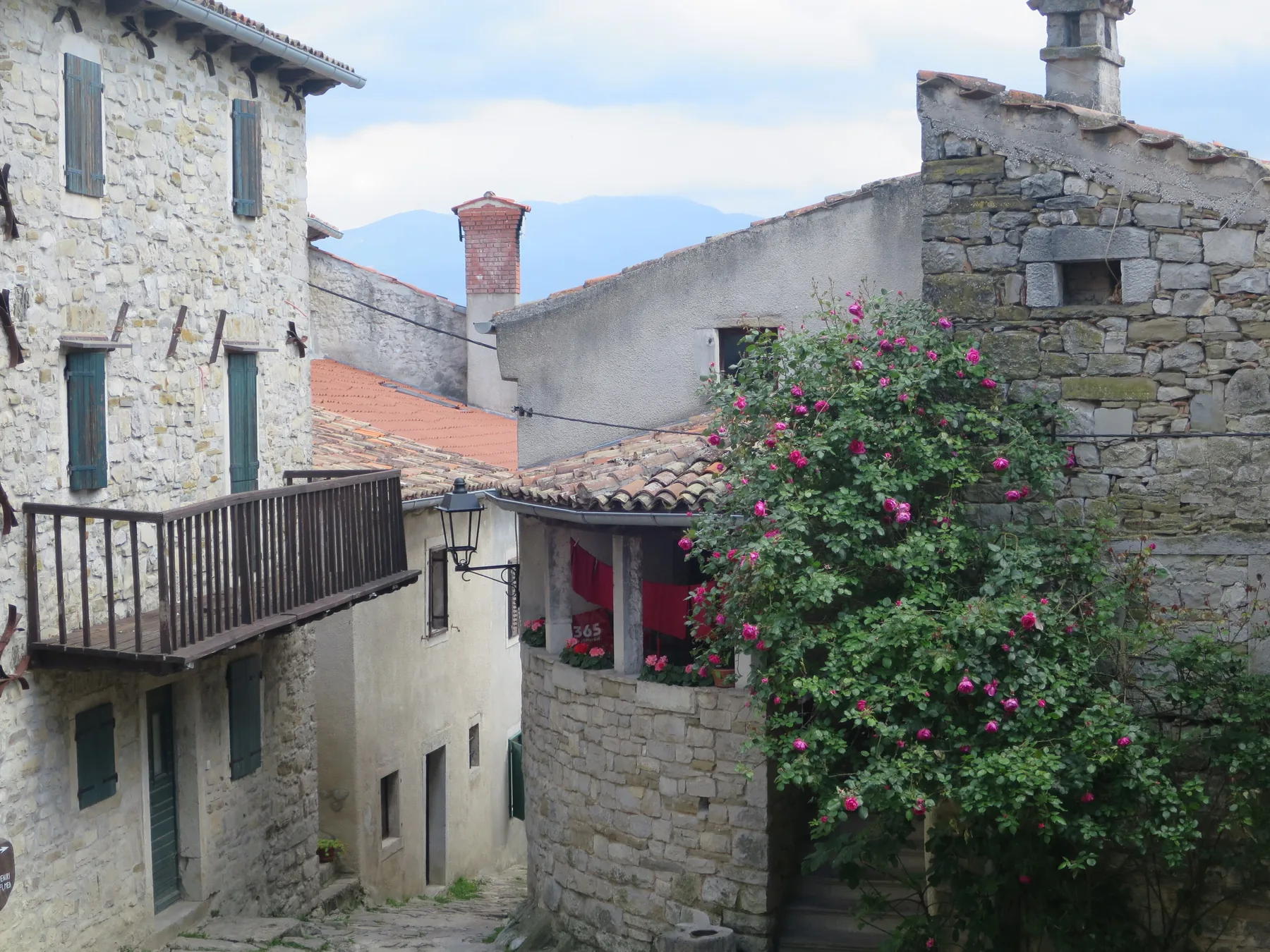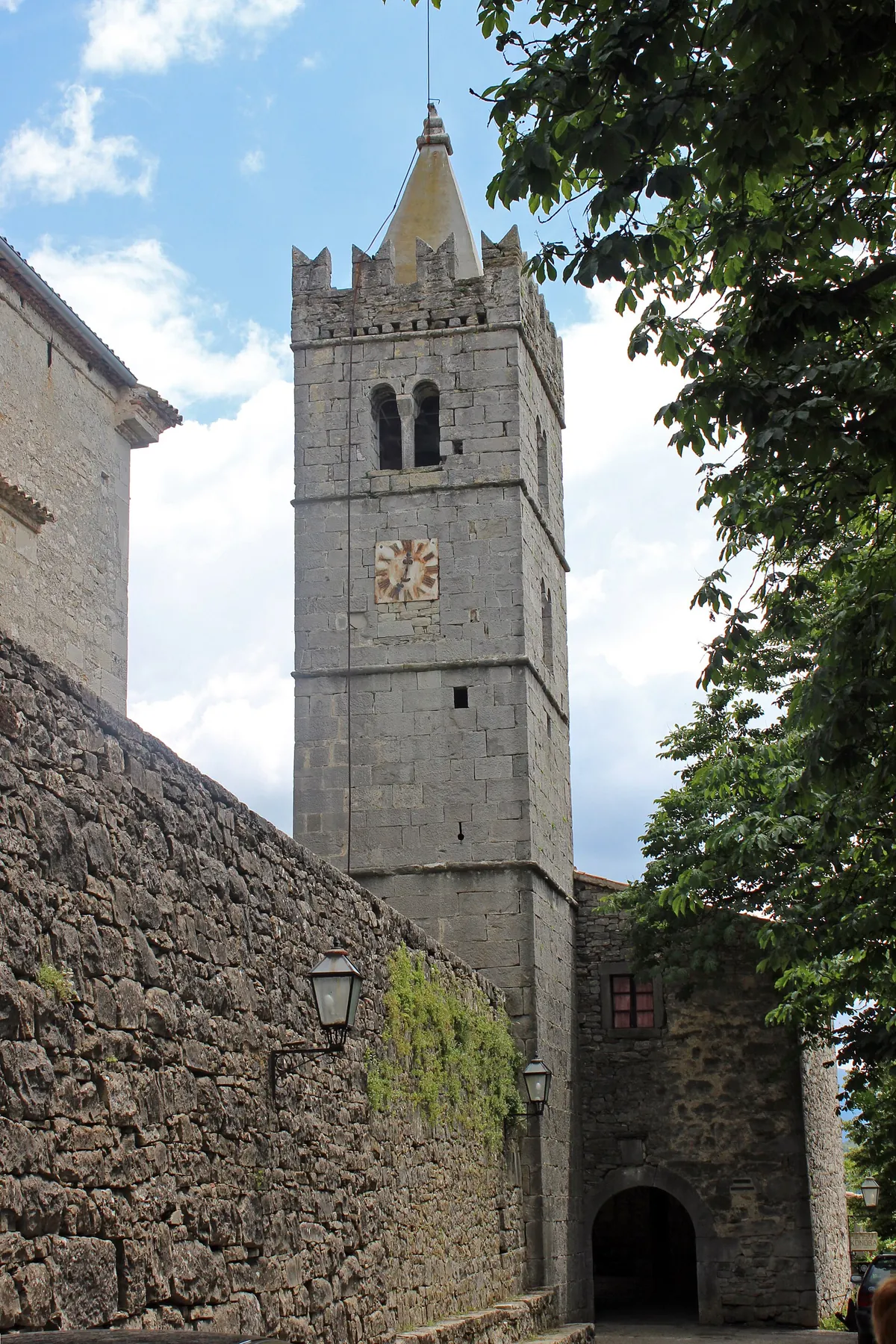
Set aside a morning for Roč. Its place in the history of Glagolitic writing gives this small hill town an interest that extends well beyond its outline. During the fifteenth and sixteenth centuries it was an important centre of Croatian literacy and printing. A visit becomes richer when you arrive with that story in mind.
Look into access to the churches and the replica printing press before travelling. The tourist board lists visits to the press by appointment; reconfirm the arrangements directly. With the practicalities settled, you can spend the time looking closely instead of searching for someone to open a door.
Follow the letters through the landscape
The Glagolitic Lane connects the story of Roč with Hum through a series of memorials along the road. These monuments celebrate the script and the people who kept it in use. They belong to a modern commemorative project, so read them as an interpretation of history rather than as medieval remains.
Choose several stops that interest you and take time to understand their names and forms. The route is more rewarding with a little preparation or a knowledgeable guide. If travelling by car, stop only where it is safe and permitted. If you hope to walk, check a suitable route in advance rather than assuming the whole road is a dedicated footpath.
Give Hum more than a glance
Hum is often described as the smallest town in the world. That familiar introduction can make visitors treat it as a quick curiosity. Its gateways, enclosed streets and Glagolitic associations deserve a closer look. Enter with enough time to notice how a town is held within such a compact space.
The town is also associated with biska, a mistletoe brandy. If you are curious, ask a local producer or host about it; tasting is only one way to learn about a tradition. Leave room for a meal or a conversation, and arrange onward transport if you plan to drink. The modest scale is a reason to slow down.
Let two places be enough
Roč and Hum make a coherent day together. A long checklist of surrounding villages can dilute what makes the pairing interesting: language, memory and the way a community records itself. Plan lunch around confirmed opening hours and keep the afternoon flexible.
Before setting out, save the information you want to read and check access to any interior you particularly wish to see. On arrival, keep your attention on the town itself. The most useful souvenir may be a name, a letter or a detail that gives the next Istrian village you visit a different meaning.
Original editorial writing informed by the sources above. Check current access, opening times and conditions before visiting.